
"Three questions" about internal management
At the morning meeting of all management cadres on May 28th, 2022, Mr. Wang asked asked the operation director and the deputy general manager of logistics to share the problems found in the internal audit led by the general manager's office, and took this as an introduction to explain the "three questions" of internal management, that is, if our system is so perfect, why are so many behaviors outside the system? If our internal control is so sound, why do so many problems often occur? If our management is so logical, why are so many problems unsolved for a long time?
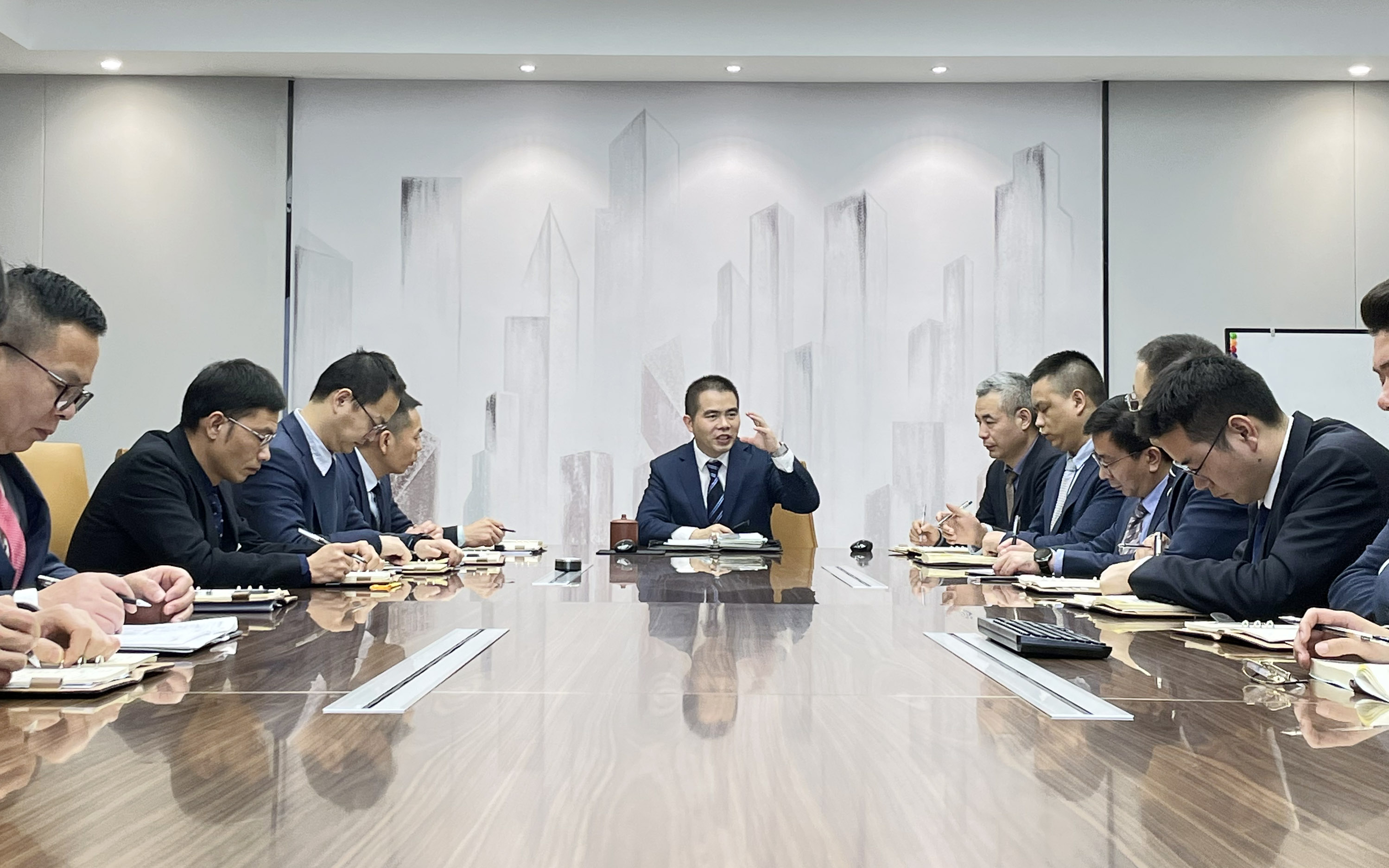
This week, under the leadership of the general manager's office, the internal audit team reviewed and evaluated the management status of each module. During the internal audit, we found some non-standard problems, such as weak data correlation between some modules of the ERP system, lagging sales orders of salespersons, and warehouse staff's failure to input orders in time. The above problems are caused by the lack of professionalism of the staff on the one hand, and the failure of the staff to develop the working habit of doing things according to the rules in their daily work on the other hand. The "three questions of internal management" mentioned today is a summary of the past work deficiencies and a reflection on the practice of the enterprise spirit of "seriousness, rigor, standardization and efficiency". At the same time, it is also one of our priorities for future improvement.
If our system is so perfect, why are so many behaviors outside the system?
As early as 2007, the company began to implement ERP system, so that everyone can work according to unified rules on the intelligent platform. Over the past 15 years, many behaviors in our daily work have been isolated from the system. For example, the data in the system cannot be linked up due to the frequent deletion of orders. After the physical objects are warehoused, it is necessary to supplement the first inspection confirmation records of the previous process. The goods have been sent to the customers, and the test reports in the system have not been uploaded yet. The company integrates the structure, system, rules, process, etc. into the system in order to ensure the unity of logistics, information flow and data flow, and provide accurate Timely information. However, due to employees' work habits, the data and information in ERP system cannot reflect the current actual state. The timeliness of problem handling is affected because the managers fail to solve the problems in person, locally and at the time. During this period, I often talked about a case: on April 30, due to the power failure of Yager branch, the warning was triggered due to the insufficient output of the lighting bulletin board. Li Lei, deputy general manager of Yager production, did not reply to the warning on April 30 until May 4 (after the May Day holiday). What is the purpose of early warning? Instead of making up the record, the manager should arrive at the scene immediately after receiving the warning information to quickly solve the problem. On the one hand, the company implements ERP system to realize the integration of logistics, information flow and data flow, on the other hand, it uses ERP system management tools to restrict the operation behavior of employees and change the randomness of employees' work. I remember that at the "third rate meeting" in 2017, the company required the heads of business, finance and production units to attend the meeting as nonvoting delegates. The purpose was to let the staff of different modules work together on the ERP system to ensure the accuracy and timeliness of data flow and information flow. From today on, in terms of system data maintenance, both planners, executive levels and supervision units should face up to the problems and find ways to solve them. For example, for logic and process problems, the Standards Office should take the lead in planning. If the system itself is not functional enough or has loopholes, the information department should supplement the weaknesses and improve the system. It is the problem of not doing things as required during the implementation process. The person in charge should do a good job of supervision, and the supervision unit should take an attitude. Those who should be punished should be severely punished. For those who are incompetent or have no growth thinking, the human resources department shall reserve personnel and replace those who should be replaced.
If our internal control is so sound, why do so many problems often occur?
At the final meeting of internal audit, when the person in charge of internal audit asked whether the data in the system was consistent with the circulation of physical objects, the financial personnel replied that the physical objects were confirmed to be in the workshop or warehouse through inventory, but the data in the system could not reflect the real circulation status of materials because the staff did not input documents in time. If the data in the system is inaccurate and can’t provide a basis for managers' judgment and decision-making, it is equivalent to internal control failure. In daily work, there are many similar situations. For example, the members of the internal audit team found that: the sales' working habits are very bad, the goods are delivered to the customer, and the bill is not sold for a week or two. The MPS specialist did not consider the complexity of the process when signing the delivery date. The material controller did not carefully evaluate the supplier's capacity when purchasing. In fact, whether the internal control work is sound depends not on how rigorous your logic planning is, how standardized your process is, and how many control points are set in the system, but on whether your implementation process follows the rules and whether the implementation results meet expectations. Objectively speaking, if our internal control is sound, there will not be so many delayed orders. If our internal control is sound, there should not be unbalanced output. If our internal control is sound, there should not be so many mantissa that have not been cleared for a long time. In terms of internal control, we should have a result oriented thinking. We should not see what you have done, but what you have achieved. We can't be top students in planning and poor users in implementing results.
If our management is so logical, why are so many problems unsolved for a long time?
I received complaints from A009 customers about the high and low feet of the frames and from Q005 customers about the delivery date this morning. These two complaints are also problems that we have not been able to solve for a long time. In the daily management, there are many similar problems, such as the audit department's weekly notification of the existence of more or less processes in the PE planning, the loose foot sleeves found in the finished product workshop, and some five-level warnings that cannot be eliminated for a long time. If our management were so logical, there would not be so many problems that could not be solved for a long time. A learning organization should have a growth mindset, be able to apply the learned knowledge to its work, summarize the work experience and formulate standards. In fact, the best learning is problem learning, that is, learning lessons and summarizing laws in the process of solving problems. If we can't put what we have learned into practice, how can we reflect the significance and value of the activities we have organized. Such as the manager's reading club, the manager's reading experience every day, the CQE's CAP improvement report and workshop training?
Whether it is system maintenance or internal control management, we should follow the enterprise spirit of "seriousness, preciseness, standardization and efficiency". In terms of system data maintenance, planners, executive levels and supervision units should face up to problems, find ways to solve problems, and let employees develop the working habit of doing things as required. In terms of internal control, we should be result oriented. We should not be top students in planning and poor users in implementing results At the same time, we should have growth thinking, apply what we have learned, and learn lessons and summarize laws in the process of solving problems.